

CJC-1295 w/ DAC 5MG

CJC-1295 w/ DAC 5MG
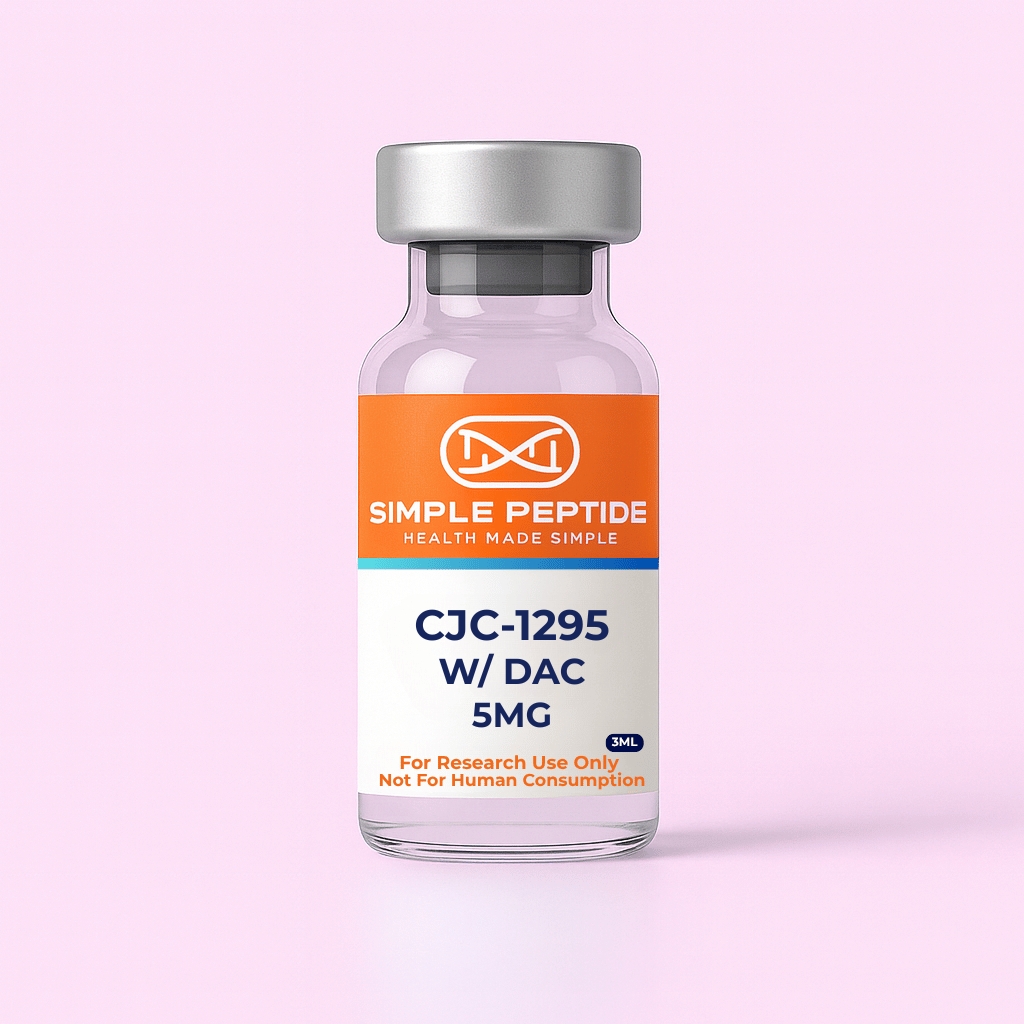
CJC-1295 w/ DAC 5MG is a synthetic analogue of growth hormone-releasing hormone (GHRH) that consists of the same 29-amino acid peptide backbone as CJC-1295 w/o DAC but includes an additional chemical modification known as DAC, which extends the half-life up to 8 days.
Availability: In stock
Purchase & earn 70 points!CAS Number: TP2328L (863288-34-0)
Molecular Formula: C154H256N44O44
Molecular Weight: 3427.9 g/mol
Form: Lyophilized Powder
Quantity: 5mg
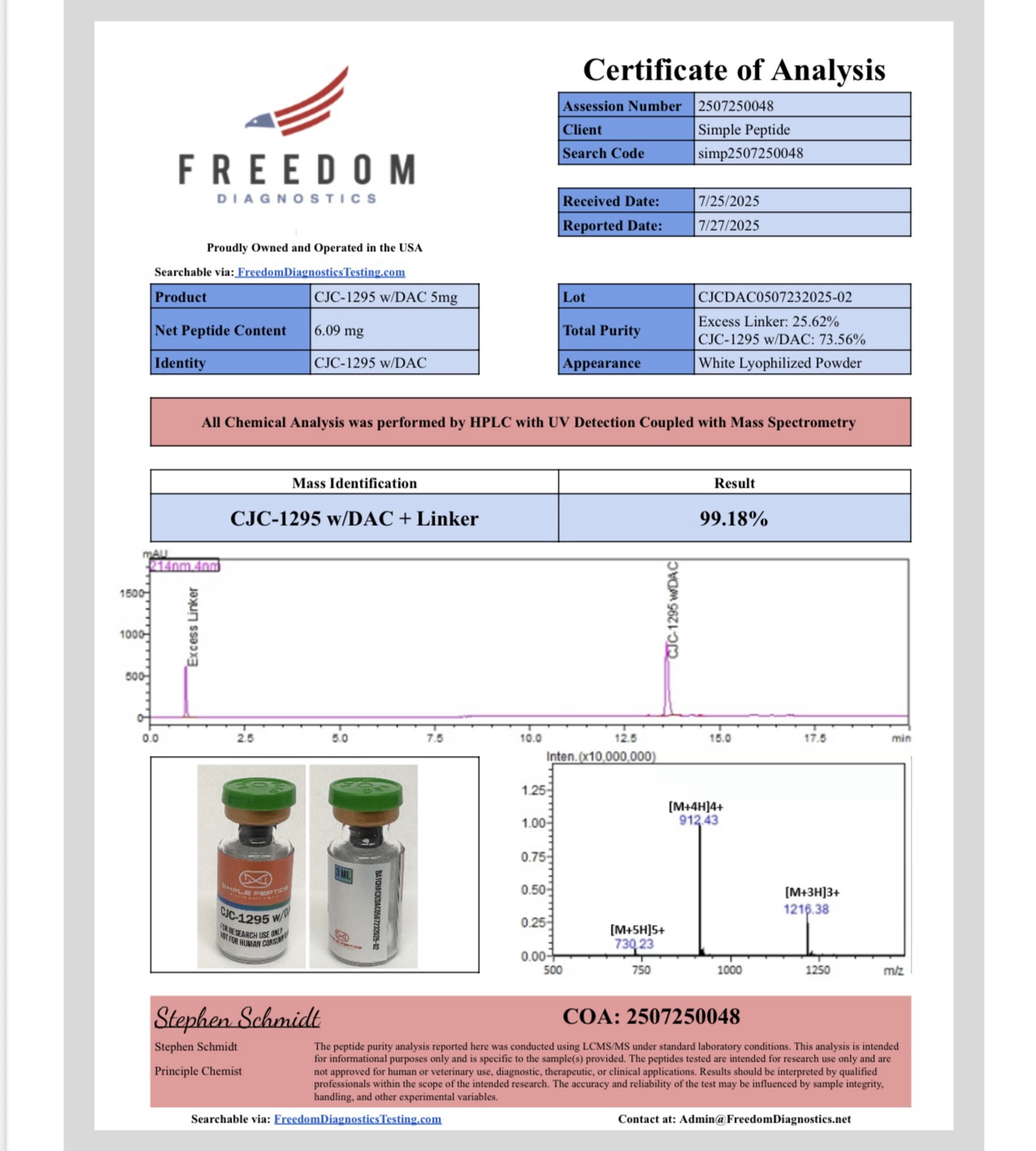
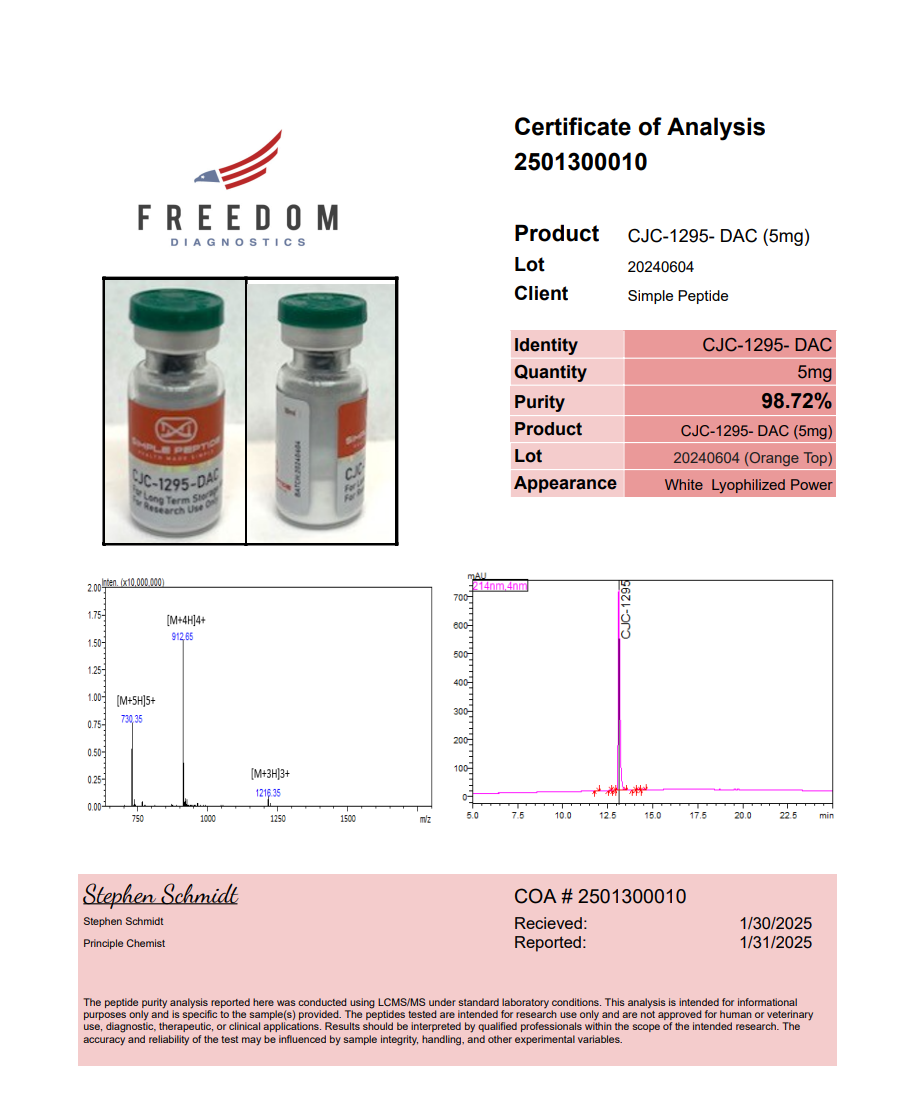
Purity: ≥ 98.5% (HPLC Verified)

GH Secretagogue Effects
CJC-1295 w/ DAC helps researchers study the effects that prolonged release of GH via the Pituitary has on metabolism and tissue growth.

Scientific Research
Since CJC-1295 w/DAC has a half-life of up to 8 days, researchers can maintain steady levels, which helps to collect consistent and reliable data.

Research Stability
CJC-1295 w/DAC is lyophilized to preserve the stability and integrity of this product and provide consistent outcomes in laboratory settings.
Understanding CJC-1295 w/DAC

CJC-1295 w/DAC is a peptide that may increase the production of growth hormone (GH) and insulin-like growth factor-1 (IGF-1). It is believed to work by stimulating the liver to produce IGF-1 through the JAK-STAT signaling pathway.
Studies suggest that CJC-1295 w/DAC can create a significant and lasting increase in both GH and IGF-1 levels, with effects potentially lasting for several weeks and having a cumulative impact with consistent research.
Key Benefits of CJC-1295 w/DAC

Aids research into the effects of prolonged GH release
Enables longer-duration studies due to a half-life up to 8 days
Promotes consistent research outcomes of GH secretion
Researchers can study the effects of GH and IGF-1 secretion
Investigated for impacts to metabolism and tissue growth/repair
Provides a tool for exploring GHRH-R and JAK-STAT signaling
Lyophilized format provides consistent outcomes in laboratory settings
Advancing Science w/ CJC-1295 w/dac
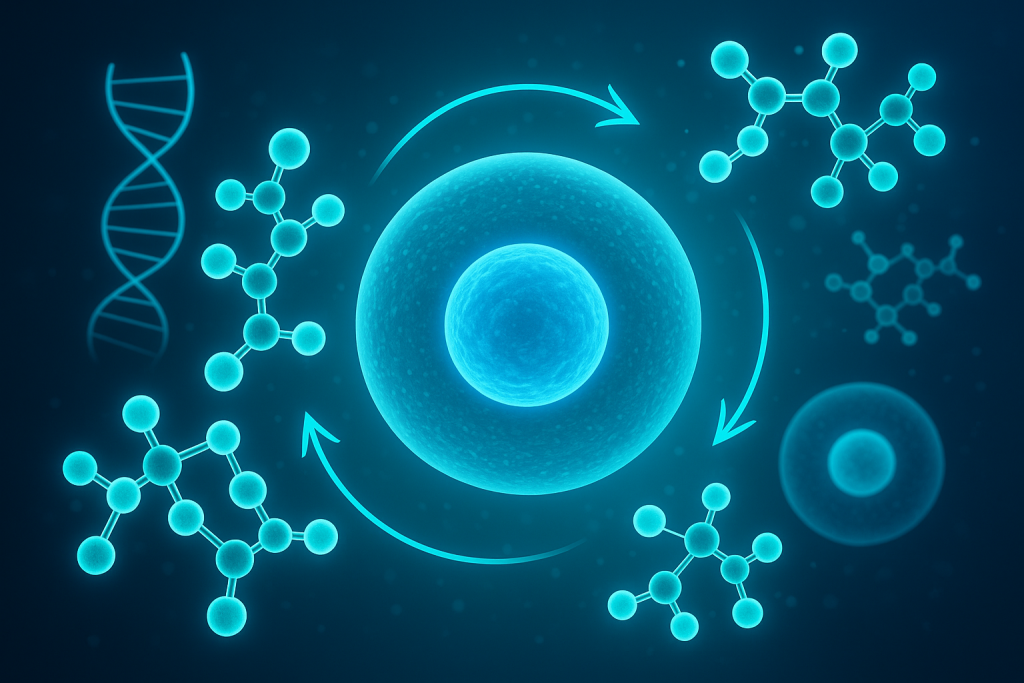
CJC-1295 w/DAC binds to the GHRH receptors on the anterior pituitary gland located on the surface of somatotropic cells. Upon binding, the receptor undergoes a conformational change that activates a well-defined signaling cascade:
- The adenylyl cyclase stimulates the enzyme adenylyl cyclase.
- Adenylyl cyclase catalyzes ATP into cAMP (cyclic adenosine monophosphate).
- The accumulation of cAMP leads to the activation of cAMP-dependent PKA (Protein Kinase A).
- PKA adds a phosphate group to activate the CREB phosphorylation process, binding to specific DNA sequences (CREs) located in the GH gene.
- The CREB binding event initiates the transcription of the GH gene, leading to the synthesis of new GH mRNA and new GH protein.
CJC-1295 w/ DAC 5MG, also known as DAC:GRF (short for drug affinity complex: growth hormone-releasing factor), is a synthetic analogue of growth hormone-releasing hormone (GHRH) (also known as growth hormone-releasing factor (GRF)) and a growth hormone secretagogue (GHS). CJC-1295 w/ DAC consists of the same 29-amino acid peptide backbone as CJC-1295 w/o DAC but includes an additional chemical modification known as the Drug Affinity Complex (DAC). The DAC allows the peptide to covalently bind to serum albumin, dramatically extending its half-life up to 8 days.
CJC-1295 w/DAC binds to the GHRH receptors on the anterior pituitary gland located on the surface of somatotropic cells. Upon binding, the receptor undergoes a conformational change that activates an associated intracellular heterotrimeric G-protein. This initiates a well-defined signaling cascade:
- Adenylyl Cyclase Activation: The activated subunit stimulates the membrane-bound enzyme adenylyl cyclase.
- cAMP Production: Adenylyl cyclase catalyzes the conversion of adenosine triphosphate (ATP) into the second messenger molecule cyclic adenosine monophosphate (cAMP).
- PKA Activation: The accumulation of intracellular cAMP leads to the activation of cAMP-dependent Protein Kinase A (PKA).
- CREB Phosphorylation and Gene Transcription: The activated catalytic subunits of PKA translocate into the cell nucleus. There, they phosphorylate (add a phosphate group to activate) a key transcription factor called cAMP Response Element-Binding protein (CREB). Phosphorylated CREB, along with co-activators, binds to specific DNA sequences known as cAMP response elements (CREs) located in the promoter region of the GH gene. This binding event initiates the transcription of the GH gene, leading to the synthesis of new GH messenger RNA (mRNA) and, subsequently, new GH protein.
Related Articles:
- The somatotropic axis – ResearchGate, accessed September 14, 2025, https://www.researchgate.net/publication/289888661_The_somatotropic_axis
- The somatotropic axis in human aging: Framework for the current state of knowledge and future research – PMC, https://pmc.ncbi.nlm.nih.gov/articles/PMC4919980/
- GH-Releasing Hormone Neurons Regulate the Hypothalamic …, https://academic.oup.com/endo/article/166/5/bqaf062/8103983
- Feedback regulation in somatotropic axis: Hypothalamus secretes …, https://www.researchgate.net/figure/Feedback-regulation-in-somatotropic-axis-Hypothalamus-secretes-two-hormones-which_fig1_342152637
- Normal Physiology of Growth Hormone in Normal Adults – Endotext – NCBI Bookshelf, https://www.ncbi.nlm.nih.gov/books/NBK279056/
- Pulsatile Secretion of Growth Hormone (GH) Persists during Continuous Stimulation by CJC-1295, a Long-Acting GH-Releasing Hormone Analog | The Journal of Clinical Endocrinology & Metabolism | Oxford Academic, https://academic.oup.com/jcem/article/91/12/4792/2656274
- The growth hormone–insulin-like growth factor-I axis in the diagnosis and treatment of growth disorders – PMC – PubMed Central, https://pmc.ncbi.nlm.nih.gov/articles/PMC5987361/
- Prolonged Stimulation of Growth Hormone (GH) and Insulin-Like Growth Factor I Secretion by CJC-1295, a Long-Acting Analog of GH-Releasing Hormone, in Healthy Adults | The Journal of Clinical Endocrinology & Metabolism | Oxford Academic, https://academic.oup.com/jcem/article-abstract/91/3/799/2843281
- Regulation of Body Processes – Hormonal Regulation of Growth – Biology LibreTexts, https://bio.libretexts.org/Bookshelves/Introductory_and_General_Biology/General_Biology_(Boundless)/37%3A_The_Endocrine_System/37.10%3A_Regulation_of_Body_Processes_-_Hormonal_Regulation_of_Growth
- GH-Releasing Hormone Neurons Regulate the Hypothalamic-Pituitary-Somatotropic Axis via Short-Loop Negative Feedback | Request PDF – ResearchGate, https://www.researchgate.net/publication/390441251_GH-releasing_hormone_neurons_regulate_the_hypothalamic-pituitary-somatotropic_axis_via_short-loop_negative_feedback
Storage and Handling:
To preserve the stability and integrity of this product, store it in a cool, dry place, shielded from direct sunlight. Handle CJC-1295 w/ DAC 5MG with care, following safe laboratory practices to ensure accurate and reliable results.